The Origins of GrubVetter
July 23, 2026 · Aaron Dancygier
In 2010, New York City made its restaurant health inspection data available to the public. NYC BigApps, the city's open-data competition, was running that year, and I started looking for something useful to build with it.
For my entry, I settled on a health inspection bookmarklet that sat on top of Yelp. On any restaurant's Yelp page, one click pulled up that restaurant's city health grade and the violations behind it, right alongside the reviews.
Over the next few years, NYC Health Ratings grew into a full website with real users. There was a searchable map, a page for essentially every restaurant in the city, and neighborhood and borough breakdowns once I built out the geographic indexing. Behind it ran a script that pulled the city's data file each month and geocoded every new address. Later came a native Android app, saved favorites, and a weekly dashboard of the best and worst neighborhoods and cuisines.
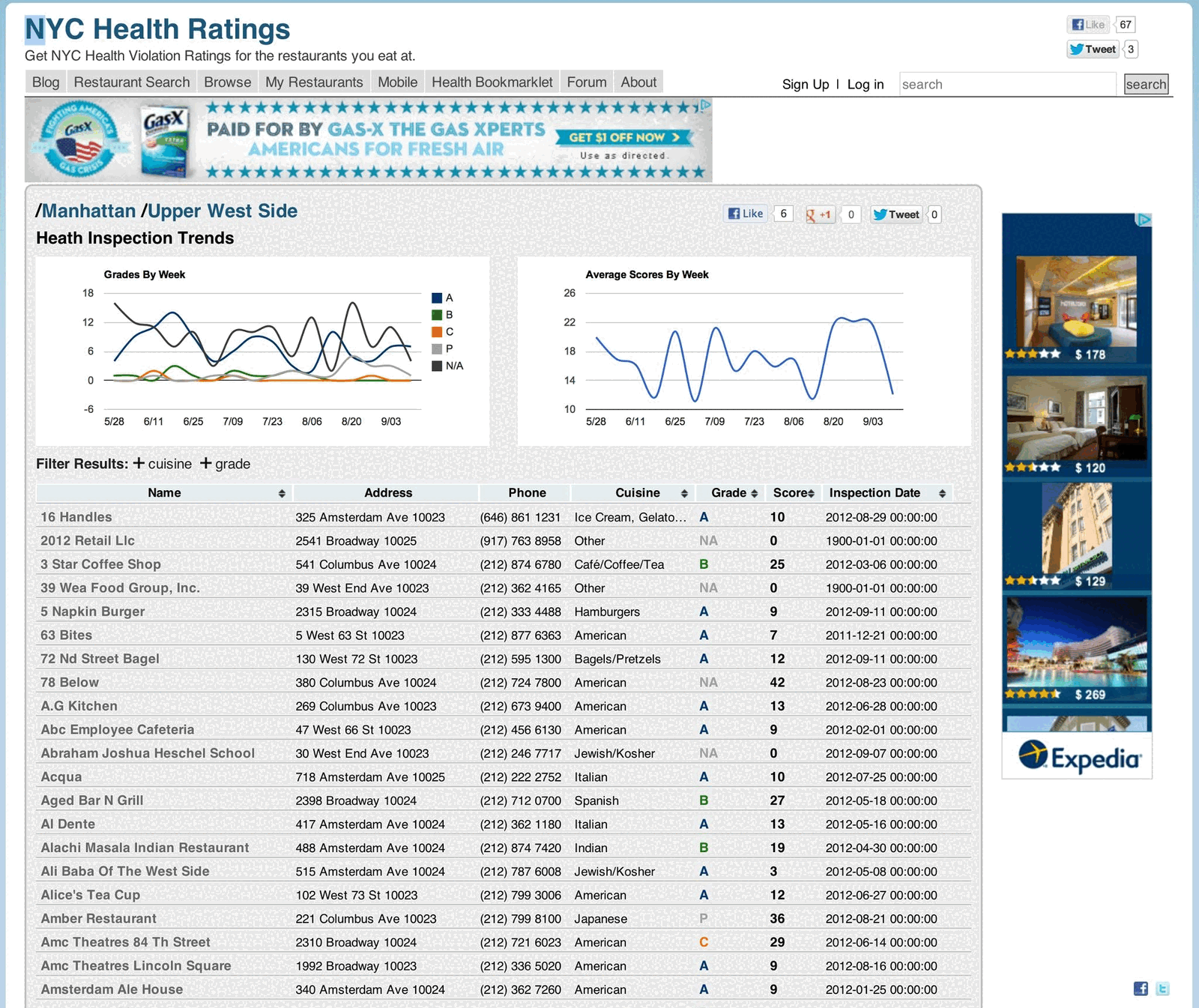
Those neighborhood pages never really went away. Every city on GrubVetter has them today.
Then, in 2016, New York City changed the format of its inspection data. The site stopped working, and I was busy with other things by then. I let it lapse.
This spring, I finally came back to it. One thing had changed while it sat idle: most cities had quietly standardized how they publish this data. What could only have been a New York project in 2010 could now work for the whole country. So I rebuilt it from scratch, sixteen years after that first bookmarklet.
Eight cities, more on the way
GrubVetter is live in eight cities today: New York, Chicago, Los Angeles, Las Vegas, Austin, Boston, San Francisco, and Seattle. It is free, and every grade comes straight from that city's health department.
Get the app


- iOS: Download on the App Store
- Android: Get it on Google Play
Or use it right in your browser at grubvetter.com.
What's next
More cities, first. The goal is every city and county that publishes inspection data, so a grade is one search away wherever you are. Then accounts, so you can save your regular spots and get an alert, by push or email, whenever one of them is inspected again. Further out, community reviews, so users can add their own alongside the official inspection data.